
ARTWORK
Artist Biography
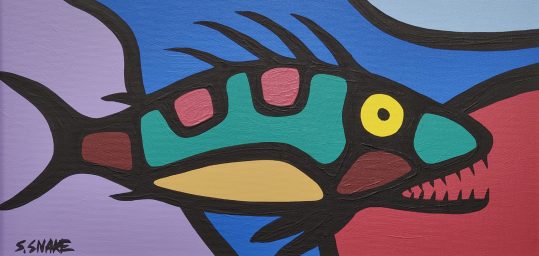
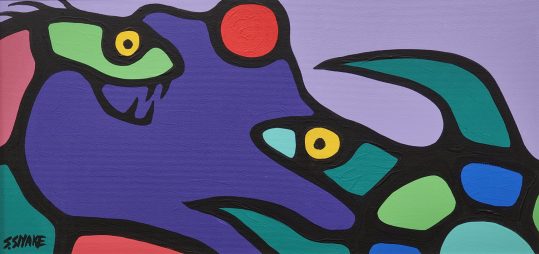
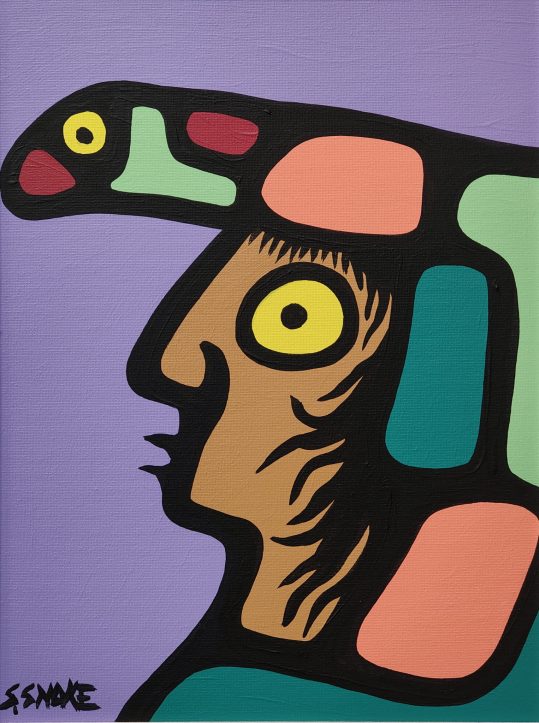
Stephen “Steve” Snake: Ojibwe Painter and Woodland School ArtistStephen “Steve” Snake is a renowned Ojibwe painter recognized for his role in bridging Indigenous portraiture, Canadian landscape traditions, and the Woodland School of art. Since the late 1980s, his career has reflected a balance of cultural continuity and innovation. Snake’s work combines the bold outlines and spiritual motifs of Woodland painting with the depth and atmosphere of impressionistic landscapes, creating a style that is both distinctive and deeply rooted in his Ojibwe heritage.
Artistic Vision and Style
Snake’s art is guided by his connection to place, community, and heritage. His landscapes of Temagami, Killarney, and Wolf Lake reveal not only the beauty of northern Ontario but also its spiritual resonance for the Ojibwe people. By painting directly from his Bear Island studio, Snake immersed himself in the land he depicted. This closeness allowed him to produce canvases that radiate intimacy, reverence, and respect for nature. Works such as Spirits of Wolf Lake show northern vistas as more than simple scenery; they stand as sites of memory, spirit, and cultural identity.
Indigenous Portraiture and Legacy
Portraiture also plays a central role in Snake’s career. His paintings of Norval Morrisseau, Arthur Shilling, and Richard Bedwash highlight influential Indigenous artists and leaders. By embedding their likenesses within a larger cultural story, Snake honors both their personal contributions and the wider legacy of Ojibwe resilience. His 2008 oil portrait of Morrisseau, now housed in the Maslak Gallery and endorsed by the Norval Morrisseau Family Foundation, remains one of his most celebrated works.
Recognition and Collections
Over the decades, Stephen Snake’s art has entered both public and private collections. Institutions such as the Royal Ontario Museum and the Canadian Embassy in Hungary have showcased his paintings. His work has also intersected with political history. Notably, one of his pieces hung in the negotiation rooms of the Robinson-Huron Treaty discussions, emphasizing his role not only as an artist but also as a cultural voice in important political moments.


